
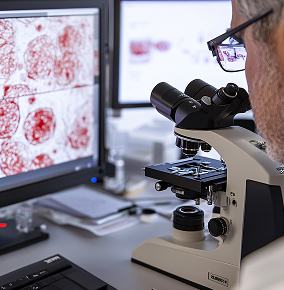
Precision oncology tailors cancer treatment to the specific genetic and molecular features of a patient's tumor, utilizing technologies like genomic sequencing and biochemistry diagnostics to identify targeted therapies. This personalized approach leads to better outcomes and fewer side effects compared to traditional treatments.
Additionally, precision oncology supports early detection and prevention by identifying genetic risk factors, enabling customized screening strategies, Integrating molecular biology with diagnostic tools enhances the accuracy of assessments, improving the overall treatment process.
As research advances, precision oncology aims to improve survival rates and the quality of life for patients, making treatment more effective and less invasive, while reducing healthcare costs.

Cancer Research

Cancer Imaging & Diagnostics

Cancer Treatment & Therapy

Cancer Preventive & Continuous Care
In-Vitro Diagnostics
- Immunology Diagnostics
- Cancer Diagnostics
Lifescience & Translational Research
- Molecular Biology & Genomics
- Biochemistry & Proteomics
- Cell Culture & Analysis
Nuclear Science & Radiology
- Diagnostic Radiology
- Nuclear Medicine & PET
- Radiation Therapy
- Radiation Research & Safety
Medical Device & SaMD
- Gynecology & Andrology
- Surgical Equipment & Consumables
Laboratory & Industrial Essentials
- Laboratory Equipment & Instruments
- Laboratory Supplies & Consumables
- Manufacturing & Production (GMP)
- Process Control & Analytical Solutions





Prostate Cancer
Prostate cancer is the fourth most commonly diagnosed cancer worldwide and the second most common in men.

Theranostics I
In the quest to conquer cancer, medical science has continually sought innovative ways to improve diagnosis and treatment.

Oncology in Women I
Cancer remains a leading cause of mortality worldwide, with women’s cancers, such as breast, endometrial, ovarian and cervical cancers, posing significant health challenges.