
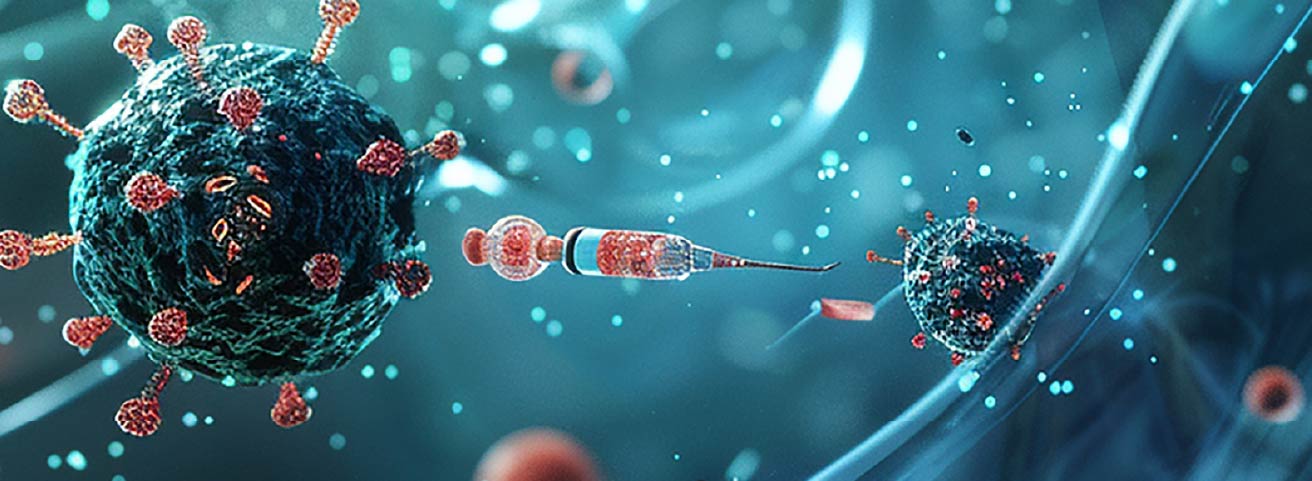
How Theranostics Works
Theranostics unfolds in a systematic two-step approach that exemplifies precision medicine in action:
Diagnostic Phase

A radiotracer, consisting of a radioactive isotope linked to a molecule that targets specific receptors on cancer cells, is administered. Advanced imaging techniques, such as positron emission tomography (PET) or single-photon emission computed tomography (SPECT) visualize tumor location and target expression levels, confirming patient eligibility for therapy. This step confirms the presence, extent, and molecular characteristics of the disease, ensuring the cancer cells express the targeted receptors. For instance, gallium-68 DOTATATE is used to image neuroendocrine tumors, while gallium-68 PSMA-11 targets prostate-specific membrane antigen (PSMA) in prostate cancer (Krenning et al., 1999).
Therapeutic Phase

If imaging confirms the presence of target receptors, a therapeutic radiopharmaceutical such as lutetium-177 is administered. The same targeting molecule emits radiation directly to cancer cells, destroying them while sparing healthy tissues (Burkett et al., 2023).
Benefits of Theranostics
Theranostics offers several compelling advantages over traditional cancer treatments, making it a cornerstone of precision oncology:- Precision: By targeting specific molecular markers, theranostics delivers radiation directly to cancer cells, reducing off-target effects and minimizing damage to healthy tissues (Burkett et al., 2023).
- Personalization: The diagnostic ensures that only patients whose tumors express the appropriate molecular targets receive treatment, maximizing the likelihood of therapeutic benefit while avoiding unnecessary exposure to ineffective therapies (Strosberg et al., 2017).
- Improved Outcomes: Clinical trials demonstrate significant benefits. For example, the NETTER-1 trial showed that 177Lu-DOTATATE achieved a 65.2% progression-free survival rate at 20 months for neuroendocrine tumors, compared to 10.8% for standard therapy [3]. Similarly, the VISION trial for 177Lu-PSMA-617 in metastatic prostate cancer reported a median survival of 15.3 months versus 11.3 months for controls
- Real-Time Monitoring: The ability to visualize treatment delivery in real-time allows clinicians to confirm that therapy reaches all intended targets and enables dynamic treatment adjustments based on individual patient response (Dargan, 2024).
- Reduced Side Effects: Studies demonstrate that patients generally tolerate theranostic agents better than conventional chemotherapy, with fewer severe side effects and improved quality of life during treatment (Turner, 2018).
Potential Side effects of Theranostics
While theranostics is generally well-tolerated, it carries potential risks, primarily due to radiation exposure.
Common side effects include:
- Fatigue and nausea around the time of treatment
- Dry mouth (xerostomia), a notable side effect of PSMA-targeted therapies due to PSMA expression in salivary glands. Amino acid infusions or cooling of salivary glands are sometimes used to mitigate this in other therapies (Burkett, 2021).
- Gastrointestinal disturbances such as constipation or diarrhea
- Hematologic Toxicity (bone marrow suppression) represents the most significant dose-limiting toxicity of theranostic agents. This can manifest as:
i Decreased white blood cell counts (leukopenia)
ii Reduced red blood cell counts (anemia)
iii Low platelet counts (thrombocytopenia)
iv In rare cases, persistent hematologic dysfunction or secondary malignancies such as myelodysplastic syndrome (O'Shea et al., 2022). - Other potential side effects like bone pain, blurred vision, and dry eyes
Challenges and Future Directions
Despite its promise, theranostics faces challenges, including the need for standardized imaging protocols, biomarker validation, and regulatory considerations (Aboagye et al., 2023). Accessibility remains a concern, particularly in low- and middle-income countries, where infrastructure and expertise may be limited (Sharma et al., 2024). Ongoing research is exploring new radiopharmaceuticals, such as alpha-particle emitters, which offer higher precision (Burkett et al., 2023). Clinical trials are also expanding indications for theranostics to other cancers, such as breast and lung cancer, and integrating artificial intelligence to enhance diagnostic accuracy and treatment planning (NCI, 2023).
Conclusion
Theranostics represents a transformative advancement in cancer care, seamlessly integrating diagnostic and therapeutic modalities to deliver personalized treatment. By leveraging molecular imaging and targeted radiopharmaceuticals, it offers precise, effective, and monitorable therapy with reduced side effects. As this field continues to mature, multidisciplinary collaboration and ongoing education will be essential to realize the full potential of theranostic medicine in transforming cancer care for patients worldwide.
The integration of diagnostic precision with therapeutic efficacy positions theranostics as a cornerstone of modern precision oncology, offering hope to patients with advanced cancers while establishing new standards for personalized cancer treatment approaches.
References
Burkett, B. J. (2021). Radioligand therapy for metastatic prostate cancer. Radiology Imaging Cancer, 3(6). https://doi.org/10.1148/rycan.2021219026
Burkett, B. J., Bartlett, D. J., McGarrah, P. W., Lewis, A. R., Johnson, D. R.,Berberoğlu, K., Pandey, M. K., Packard, A. T., Halfdanarson, T. R., Hruska, C. B., Johnson, G. B., & Kendi, A. T. (2023). A review of Theranostics: Perspectives on emerging approaches and clinical advancements. Radiology Imaging Cancer, 5(4). https://doi.org/10.1148/rycan.220157
Dargan, R. (2024, March 21). Theranostics advances precision medicine for cancer patients. RSNA News. https://www.rsna.org/news/2024/march/theranostics- for-cancer-patients
Krenning EP, et al. Radiolabeled somatostatin analogue(s) for peptide receptor scintigraphy and radionuclide therapy. Ann Oncol. 1999;10(Suppl 2):S23-S29. doi:10.1093/annonc/10.suppl_2.s23 Mattar, E., Jawerth, N., IAEA, Haidar, M., Abdel-Wahab, M., & Paez, D. (2018). Seeing cancer cells, killing cancer cells: Theranostics for diagnostics and treatment. In IAEA Bulletin. https://www.iaea.org/sites/default/files/publications/magazines/bulletin/bull60- 3/6030809_corr.pdf
O'Shea, A., Iravani, A., Saboury, B., Jadvar, H., Catalano, O., Mahmood, U., & Heidari, P. (2022). Integrating Theranostics into Patient Care Pathways: AJR Expert Panel Narrative review. American Journal of Roentgenology, 220(5), 619-629. https://doi.org/10.2214/ajr.22.28237
Strosberg, J., El-Haddad, G., Wolin, E., Hendifar, A., Yao, J., Chasen, B., Mittra, E., Kunz, P. L., Kulke, M. H., Jacene, H., Bushnell, D., O'Dorisio, T. M., Baum, R. P., Kulkarni, H. R., Caplin, M., Lebtahi, R., Hobday, T., Delpassand, E., Van Cutsem, E., . . . Krenning, E. (2017). Phase 3 trial of 177LU-Dotatate for midgut neuroendocrine tumors. New England Journal of Medicine, 376(2), 125-135. https://doi.org/10.1056/nejmoa1607427
Theranostics and AI-The next advance in cancer precision medicine | CBIIT. (2023, June 28). National Cancer Institute. https://datascience.cancer.gov/news- events/blog/theranostics-and-ai-next-advance-cancer-precision-medicine
Theranostics. (n.d.). UCLA Health. https://www.uclahealth.org/cancer/cancer- services/theranostics
Turner, J. H. (2018). An introduction to the clinical practice of theranostics in oncology. British Journal of Radiology, 91(1091). https://doi.org/10.1259/bjr.20180440